Why I Don't Expect Mitutoyo to Be Great at Everything (And You Shouldn't Either)
Here's the thing: I sign off on measurement and test equipment purchases for a 200-person manufacturing operation. Over the past six years, I've tracked more than $180,000 in instrument spending — every quote, every invoice, every calibration bill — and I've reached a conclusion that still surprises people at industry events.
No single brand is the best at every kind of measurement. And the vendors who admit that are the ones I trust most.
I buy Mitutoyo calipers and micrometers without hesitation. I do not buy automotive oscilloscopes, gas chromatographs, or thermal cameras from Mitutoyo — because I don't expect any brand to be an expert in fields they've never claimed to own. That's not a contradiction. It's a procurement strategy.
Why Mitutoyo Gets My Dimensional Measurement Spend
Let me show you the math that shaped my opinion. In 2023, I needed eight digital calipers for our fabrication line — 0-150mm range, standard shop-floor work. Mitutoyo Absolute calipers were about $220 per unit. Another brand's equivalent was $70. On sticker price, the budget option looked like a $1,200 win.
But I don't buy on sticker price anymore. I built a total-cost-of-ownership spreadsheet after getting burned twice early in my career, and it has caught real problems every year since. Here's what it caught in this case.
Within eight months, three of those $70 calipers failed calibration verification. The displays flickered when the shop floor dropped below 15°C — which mattered because our QC team relied on those readings. And the operators started re-measuring parts because they didn't trust the display. Nobody budgets for that kind of time, but everyone pays for it in overtime.
Add it up: eight budget calipers at $560, plus three failed calibrations, plus roughly two months of doubled inspection time, plus one customer batch rejected because of a questionable measurement. The rework on that batch alone ran close to $900. By the end of the year, the "cheap" calipers had cost us about $2,000 more than the Mitutoyo units would have. And I'm not even counting the quiet cost of a tool that simply reads correctly — the confidence that comes when an operator writes a number and doesn't have to second-guess it.
The Mitutoyo units, for the record, came with factory calibration certificates, survived a full year of daily shop-floor use, and never generated a single follow-up cost. Their published accuracy for the Absolute caliper series is ±0.02mm at 0-150mm, verified to ISO 13385-1 standards. That's a documented spec, not a marketing slogan. That's the difference between a professional instrument and a toy with a digital display.
The Mistake People Make After a Great Experience
Here's where things go wrong. It's tempting to think: "Mitutoyo is great at hand tools, so they must be great at all measurement." That's a simplification. Precision measurement is not one discipline — it's dozens.
A micrometer measures a physical dimension with a precision-ground screw and anvil. An oscilloscope measures electrical signals changing thousands of times per second. A gas chromatograph separates chemical compounds and detects them at parts-per-million concentrations. These share almost no engineering, no calibration standards, and no failure modes. Expertise in one does not transfer to the others.
I've developed a rule after evaluating vendors for six years: a vendor's credibility is inversely proportional to the number of categories they claim to cover. I've never met a specialist who oversold their capabilities. I've met plenty of generalists who did.
This "one trusted brand" mentality comes from an era when machining was simpler — when a tool room only needed calipers, micrometers, and dial indicators. Today, a modern facility measures dimensions, electrical signals, chemical composition, and thermal patterns on the same production floor. No single brand is world-class at all of those. Anyone who claims otherwise is describing a catalog, not a capability.
Three Cases Where I Called in a Specialist
Automotive oscilloscope. Last year, our automotive lab needed to diagnose CAN-bus communication faults in vehicle electronics. I didn't call Mitutoyo — they don't make oscilloscopes, and to their credit, they've never pretended to. I called a specialist in automotive test equipment and bought a PicoScope kit for about $350. The vendor's support team spoke CAN-bus and LIN protocol fluently, and their training materials were written by people who diagnose vehicle electronics every day. That's the depth you need when an intermittent electrical fault is halting production.
Gas chromatography. Our chemical lab needed a gas chromatograph for QC testing. I spoke with a representative from a generalist instrument brand — not Mitutoyo, but a similar "we cover everything" operation — and he was extremely confident they could supply our GC needs. I asked about detection limits for the specific ASTM method we validate against, and the conversation suddenly went vague. I called a GC specialist instead. Their first question wasn't "what's your budget?" It was "what is the sample matrix?" In thirty seconds, I knew who I was dealing with.
Thermal cameras. We've also been evaluating thermal imaging for electrical panel inspections, which naturally brought up the question: can thermal cameras see through walls? No, they can't. Thermal cameras detect infrared radiation emitted from surfaces — they map temperature differences on a surface, not whatever is behind it. A thermography specialist like FLIR states this plainly in their public technical education materials, because they'd rather you understand the physics than believe a marketing claim. That clarity is exactly what I want from a vendor.
All three decisions cost more upfront than a "one-vendor package" would have. All three delivered a calibrated, purpose-built instrument and an honest conversation with someone who knew their field cold.
But Doesn't Consolidation Save Money?
I know what you're thinking, because I used to think it myself: fewer vendors means simpler purchase orders, stronger relationships, maybe better bulk pricing. And I'll be straight with you — if you only need dimensional measurement tools, consolidating under Mitutoyo is a legitimate strategy. Their calipers, micrometers, dial indicators, and height gauges share similar interfaces and calibration workflows. Training is simpler. Calibration management is simpler.
But that logic breaks the moment your scope widens. If your facility measures dimensions and electrical signals and chemical composition and thermal patterns, forcing one brand across all four is the most expensive "saving" you'll ever implement. You'll pay in hidden costs: instruments that kind of work, support teams reading from a manual, and calibration failures appearing at the worst possible moment.
The most frustrating part of vendor management is the rep who says yes to everything. You describe a measurement problem, and suddenly they're the expert. You'd think a written specification would end the discussion, but interpretation varies wildly. The rep who says "that's outside our area" is rare — and worth more than any discount.
In 2024, when I asked a Mitutoyo representative about thermal imaging options during a quality-system evaluation, his answer was refreshingly direct:
"That's not what we do. Here's who we'd recommend for that."
I bought his system. That honesty is why I trust the brand for dimensional measurement — and it's also why I would never ask Mitutoyo to be something they're not.
Bottom Line
After six years of tracking every invoice and replacing instruments that couldn't hold up in real conditions, my rule is simple: buy each category of measurement from the brand that owns it, and reward the vendors who are honest about their boundaries.
Mitutoyo gets my dimensional measurement business, every time. I'll buy their calipers for every workstation in my shop. But when I need an oscilloscope, I'm going to the oscilloscope people. When I need a gas chromatograph, I'm going to the chromatograph people. When I need a thermal camera, I'm going to the thermography people — because they'll tell me what their tools can and cannot do.
The vendor who says "this isn't our strength — here's who does it better" has earned my business for everything else. The vendor who says "we can do all of it" has just told me they don't understand what "all of it" actually requires.
Specialization isn't a limitation. It's the whole point.
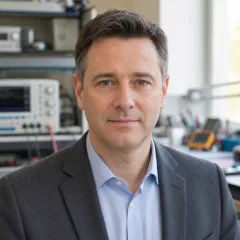
Marcus Feld
Marcus Feld is an electrical test and measurement analyst specializing in multimeters, oscilloscopes, clamp meters, insulation testers, spectrum analyzers, and data loggers. He applies IEC 61010-2-030 and IEC 61010-031 concepts while examining measurement category, bandwidth, true-RMS response, input loading, and stated uncertainty. His work helps maintenance engineers and test teams choose safe instruments with performance suited to the signals and environments they actually measure.